
Is Your Pelvic Floor Contributing to Your Constipation? A Pelvic Floor PT Explains.
Just imagine, you’re doing everything right. You’re drinking enough water, eating enough fiber, maybe even taking Miralax on the rough days. And still, nothing is moving. Or maybe even worse, something is coming out, but it takes fifteen minutes of work and leaves you feeling like you didn’t actually finish the job at the end.
Here’s the thing… If the muscles that control bowel movements are working against you instead of for you, they can make pooping a lot harder.
Your pelvic floor, that group of muscles sitting at the base of your pelvis, plays a direct role in your bowel function. And when those muscles aren’t coordinating properly, no amount of fiber or water is going to fully fix this frustrating problem.
As a pelvic floor physical therapist, this is an incredibly common problem that we see in our clinic. Sometimes it’s a daily issue, sometimes it fluctuates based on stress, travel and hormones. So in today’s post, we’re talking about constipation, the pelvic floor and what you can do to help yourself poop better.
What Does “Normal” Actually Look Like?
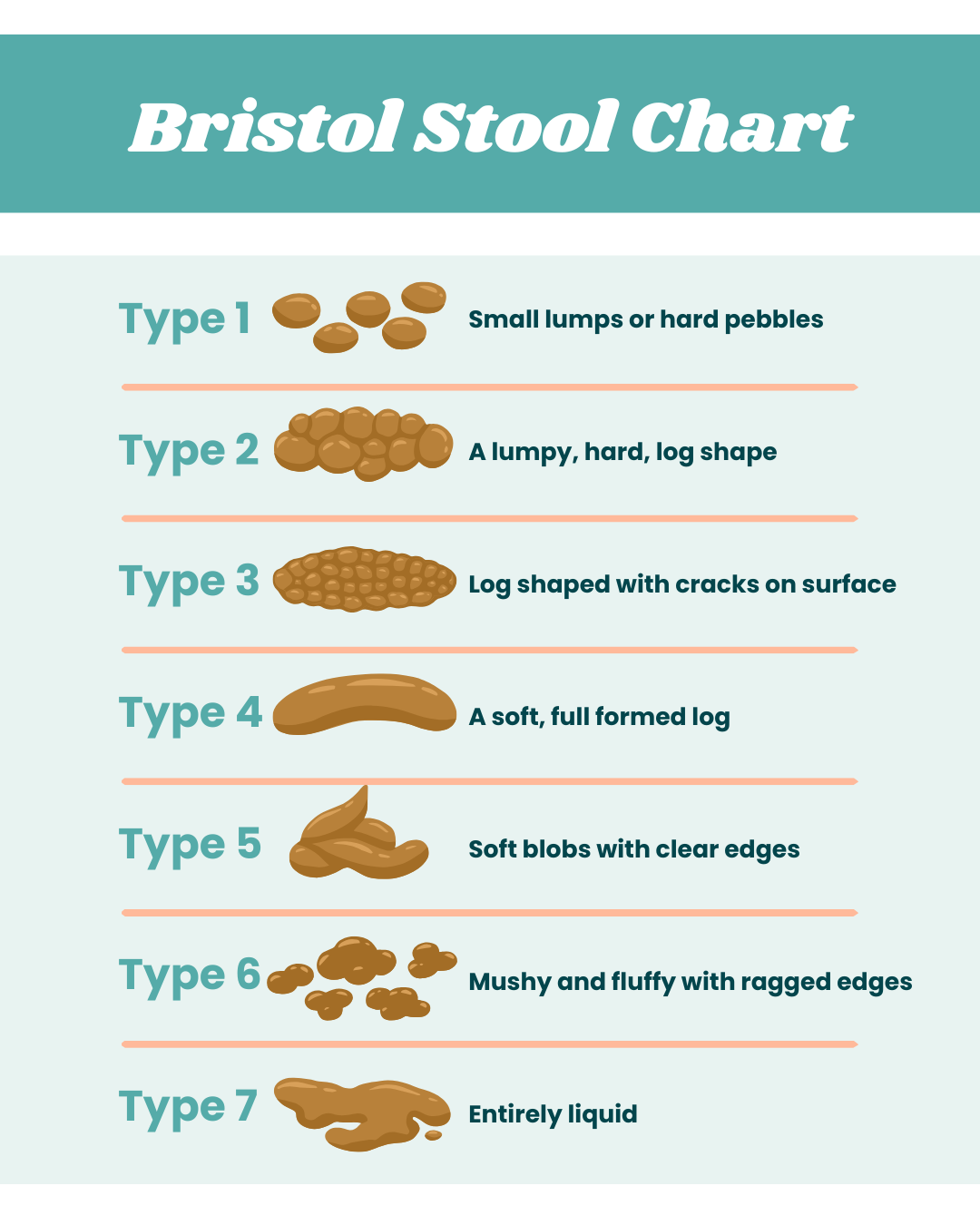
What’s considered to be “normal” for bowel movements is quite a personal question.
Healthy bowel movement frequency ranges from three times a day to three times a week. What’s normal for you might look completely different from what’s normal for your best friend. And an equally important question isn’t just how often you go, but what happens when you go as well as how you feel in between bowel movements. You may be going every day and still be constipated. Or you may go just a few times a week and have no issues at all.
Signs that something might be off, even if you poop regularly:
You’re straining to go
Your stool is hard, dry, or comes out in small pellets
You feel like you never fully empty
Bowel movements are painful or uncomfortable
You’re going fewer than three times a week consistently
You feel full and uncomfortable in between bowel movements
What your poop looks like matters, too. The Bristol Stool Chart is a useful reference point. You typically want a type 4 or 5 poop, where the stool is fully formed, easy to pass and doesn’t require significant effort. If you’re regularly landing on a 1 or 2 and your stool is hard or lumpy, that’s a sign that your poop is dehydrated and may be increasing your pain or difficulty emptying.
Hormonal fluctuations throughout the menstrual cycle, pregnancy, and postpartum recovery all influence gut motility and bowel function. But don’t worry, we can work with these often predictable changes.
What Is the Pelvic Floor, and What Does It Have to Do with Pooping?
Your pelvic floor is a group of muscles that form a hammock-like structure at the base of your pelvis. These muscles support your bladder, uterus, and bowels, and they’re responsible for a lot more than folks realize.
Your pelvic floor muscles surround your anal opening. For a bowel movement to happen smoothly, your pelvic floor muscles need to relax and lengthen to allow the rectum and anal opening to relax and open. If those muscles are holding tension and can’t fully let go, your body is essentially trying to push stool out through a door that won’t open all the way.
Think of it like trying to squeeze toothpaste out of a tube with the cap still on.
Most people assume that pelvic floor problems mean weakness, that everything is “too loose” and needs to be tightened up. But the pelvic floor can also be too tight, and a hypertonic (overactive) pelvic floor can make it just as hard to poop as one that’s too weak. Sometimes harder.
And if you’re trying to poop with the cap still on, stool will sit in your rectum longer. The longer stool sits, the more water gets resorbed back into your body, the harder the poop gets. Then not only are you trying to poop with the cap still on, but you’re also trying to push out something harder and firmer than is ideal.
The Pelvic Floor - Constipation Connection: What Can Go Wrong
There are a few specific ways pelvic floor dysfunction shows up as constipation or difficult bowel movements:
Pelvic floor dyssynergia
This is a coordination problem where the pelvic floor muscles contract when they should be relaxing during defecation. Instead of letting go, they tighten, which creates a functional blockage. You can be bearing down with all your might but in the case of dyssynergia, your muscles are literally working against you.
A hypertonic (too-tight) pelvic floor
Chronic stress, trauma, pelvic pain, and even poor posture can all lead to a pelvic floor that’s stuck in a state of tension. These muscles respond to our nervous system, and when we’re stressed, guarded, or in pain, they tend to brace. Over time, that baseline tension interferes with the normal relaxation needed for a bowel movement.
Stress and holding patterns
Your pelvic floor is deeply connected to your nervous system. Chronic stress, anxiety, and even the habit of “holding it” when you feel the urge to go can all disrupt normal bowel function over time. If you’re someone who doesn’t like to poop in public, this may be you.
Pregnancy
Constipation during pregnancy is incredibly common, and it’s not just about diet. Progesterone, the hormone that helps maintain pregnancy, also relaxes smooth muscle throughout the body, including in the gut, which slows digestion significantly. Add in the growing uterus compressing the intestines, the pelvic floor under increasing load, and often the introduction of iron supplements, and you’ve got a perfect storm.
Postpartum changes
Birth, vaginal or cesarean, can significantly disrupt the nerves, muscles, and coordination of the pelvic floor. Postpartum constipation is common in the early weeks, and for some women, bowel dysfunction persists much longer. Fear of pain with the first postpartum bowel movement can also lead to holding patterns that compound the problem.
Other Reasons You Might Be Struggling (That Your PT Can Also Address)
Pelvic floor dysfunction is often a part of the problem, but there are usually a few other factors. Here are a few other things that could play into your symptoms:
Toilet positioning
Believe it or not, there is an ideal position to be in when you poop. When we sit with feet flat on the floor and a standard toilet height, there’s still a kink in the rectum which makes it harder to pass stool. Elevating your feet (with a Squatty Potty or even a stack of books) puts you in a more squat-like position, which straightens the angle from your rectum to your anus and makes things significantly easier. This sounds too simple, but I cannot overstate how much of a difference this makes for people.
Breath mechanics
The way you breathe during a bowel movement matters more than you’d think. Holding your breath and bearing down hard (called a Valsalva maneuver) creates a lot of pressure but doesn’t always give the pelvic floor the cue it needs to relax. Learning to exhale while gently bearing down - coordinating your breath, core, and pelvic floor together - is something we can work on together if this is a problem for you.
Hydration and fiber
Fiber pulls water into the stool to keep it soft and moving, and adequate hydration is necessary to make that possible. Most adults need around 25–30 grams of fiber per day, and if you’re increasing fiber, doing so gradually helps avoid bloating and discomfort. We need your muscles to relax at the right time but we also need your poop to be soft and easy to pass. Aiming for half your body weight in ounces of water per day is a reasonable goal.
Bowel habits and urgency suppression
Chronically ignoring the urge to have a bowel movement disrupts the normal defecation reflex over time. Your body sends the signal, you override it, and eventually the signal gets quieter. Responding to the urge within a reasonable window, not immediately abandoning what you’re doing, but not putting it off indefinitely either, is an important habit for long-term bowel health.
These bowel habits don’t happen in a vacuum. If you’re in perimenopause or menopause and noticing constipation, bladder changes, or pelvic floor tension, menopause physical therapy in Austin can help you connect the dots and build a plan that supports both bowel and bladder health.
If you’re pregnant, constipation and straining can feel especially frustrating—and they can add pressure to an already changing pelvic floor. Prenatal physical therapy in Austin can help you manage bowel habits, breathing, and pelvic floor tension safely through pregnancy.
Bladder symptoms like leaking, urgency, or frequent urination often travel with bowel issues. If that sounds familiar, urinary incontinence treatment in Austin, TX can help you retrain bladder habits and coordinate your pelvic floor so you’re not stuck planning your day around the nearest bathroom.
If you feel heaviness, bulging, or pressure in the vagina—especially when you strain or have a bowel movement—pelvic organ prolapse physical therapy in Austin, TX can help you manage pressure, improve bowel habits, and support your pelvic organs without worsening symptoms.
How a Pelvic Floor PT Actually Helps with Constipation
When you come in to see a pelvic floor PT for bowel concerns, the first thing we do is figure out what’s actually going on.
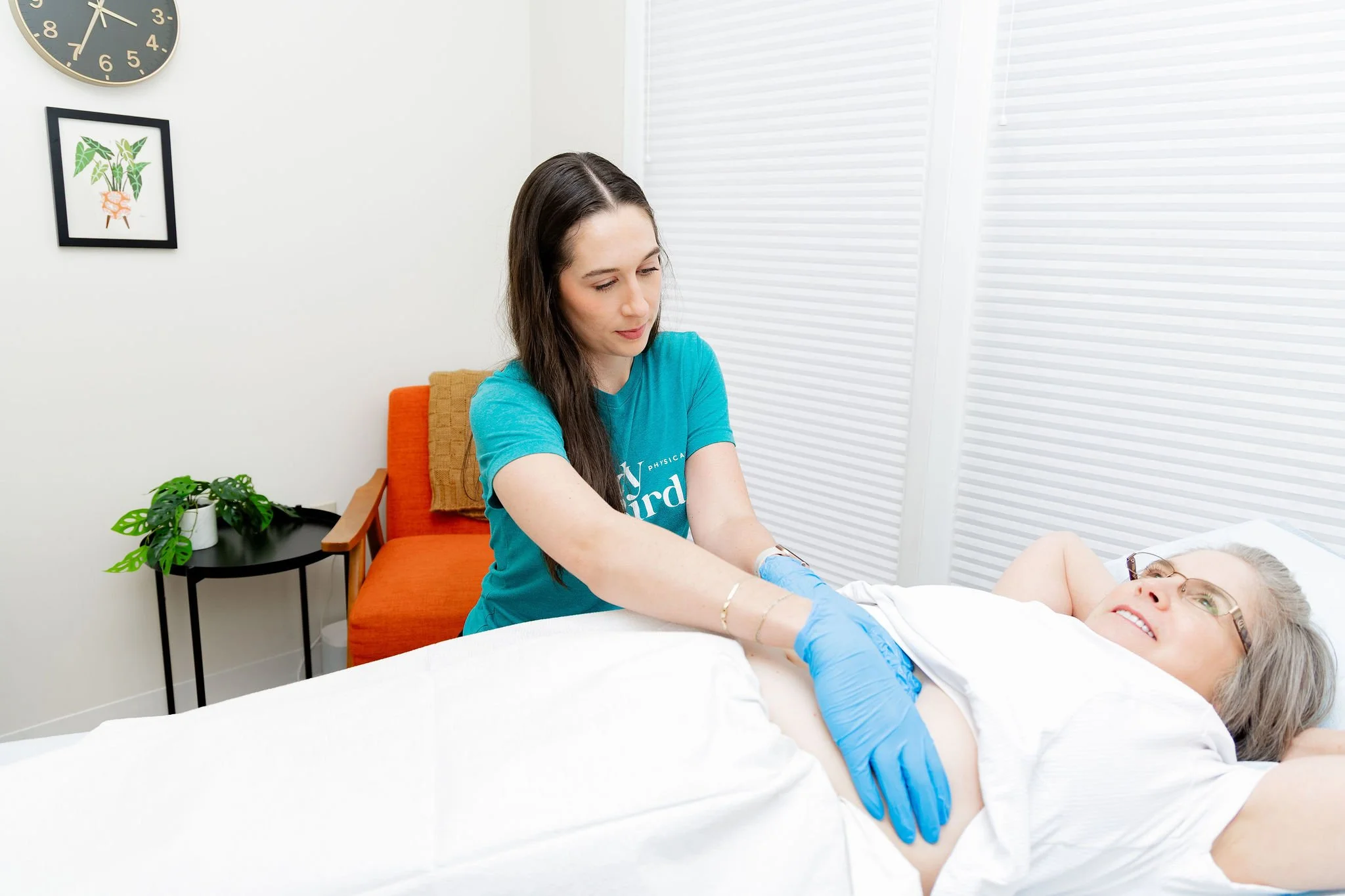
An internal pelvic floor assessment allows us to evaluate the resting tone of your muscles, how well they can contract and relax on command, and whether there are areas of tightness or tenderness contributing to your symptoms. This can be done vaginally, but if the main concern is constipation, we’ll often recommend a rectal exam as well.
From there, treatment might include:
Manual therapy to release tension in the pelvic floor and surrounding tissues
Breathing and pressure management training to coordinate your breath, core, and pelvic floor
Bowel habit changes like timing, positioning, straining mechanics, and responding appropriately to urges
Dietary and fluid intake assessments and changes
Targeted movement and exercise to help things along
We often start by seeing folks weekly for a few visits before reducing frequency to every other week, down to every month.
What You Can Try at Home Right Now
Here are some simple tricks that work for most people:
Elevate your feet on the toilet. A Squatty Potty is the most convenient option, but a stack of books or an old shoe box works just as well. Aim for your knees to be above your hips.
Practice exhale-bearing down. Instead of holding your breath and pushing, try exhaling slowly through pursed lips while gently bearing down. See if that changes how much effort it takes.
Try an abdominal massage. Using moderate circular pressure, massage your abdomen up the right side from your right hip to right rib cage, across the top to the left rib cage, and down the left hip. This follows the direction of your colon and can help stimulate movement. Make sure you’re using lotion or oil!
Don’t suppress the urge. When you feel the urge to go, try to respond within a reasonable amount of time. Go when you need to go and don’t worry about spending tons of time on the toilet when it’s not happening.
Check your fiber and water together. Fiber without adequate hydration can actually make constipation worse. Make sure you’re getting both.
When to See a Pelvic Floor PT for Constipation
Consider reaching out if:
You’ve had constipation for a few months and lifestyle changes haven’t helped
You feel like you never fully empty, no matter how long you sit
You’re straining regularly
Bowel movements are painful
You have a history of pelvic pain, painful sex, or other pelvic floor issues
This is exactly the kind of thing we treat every day at Lady Bird PT, in person in Austin and virtually. You don’t have to keep suffering through uncomfortable bowel movements or white-knuckling it with a fistful of supplements. There’s a more targeted way to get to the root of what’s happening.
Your body isn’t broken. It may just need some retraining. We’ve got you.
Book a free discovery call with our team at Lady Bird PT or send us a message. We’ll help you figure out what’s going on and what to do about it.

This post was written by Dr. Rebecca Maidansky, PT, DPT, owner and founder of Lady Bird Physical Therapy. Rebecca is a pelvic floor physical therapist in Austin, TX and founded Lady Bird Physical Therapy in 2019. She is the creator of Birth Preparation and Postpartum Planning, Baby Steps Fitness and the head writer and editor of The Pelvic Press.
Rebecca is a passionate writer and vocal advocate for pelvic health and the importance of improving access to perinatal care. She believes strongly that many common pregnancy pains and postpartum symptoms can be eased or even prevented with basic education and care.
She created this blog to help all birthing people manage common pregnancy pains, prepare for birth and recover postpartum.