
Can Dry Needling Help Your C-Section Scar? Here's What a Pelvic PT Wants You to Know
A cesarean is a major abdominal surgery, and people are often not given the support they deserve after going through it. Recovering from a c-section isn't just about healing from the procedure itself; it's also recovering from months of pregnancy, compounded by the sleep deprivation and demands of a newborn.
If your scar still feels tight, numb, or tender, or pulls in uncomfortable ways as you move through your day, there is a lot we can do to support your healing. We typically recommend starting with gentler techniques like scar desensitization, scar massage, and cupping but if those aren't getting you the results you're looking for, dry needling might be the next technique worth trying.
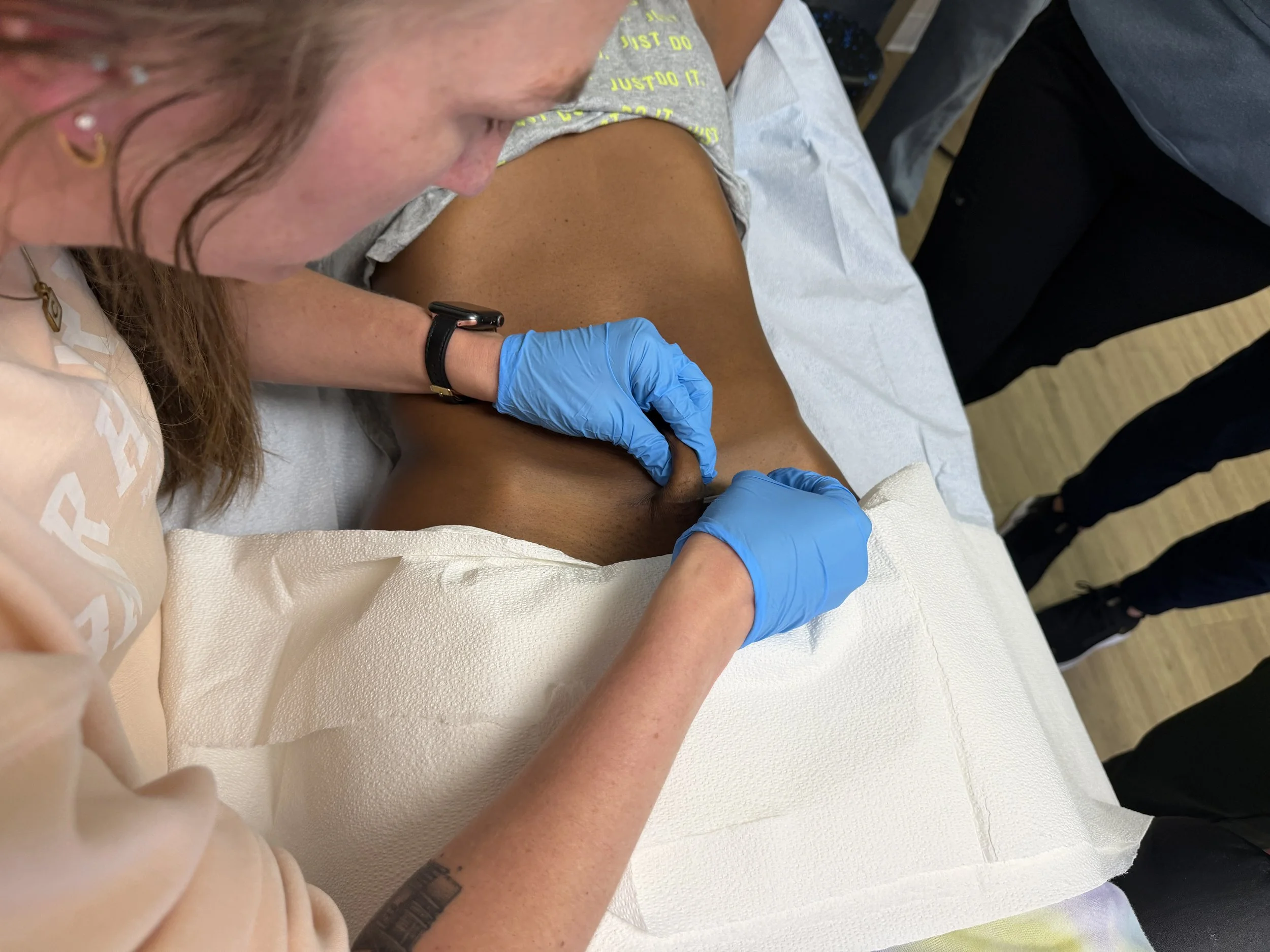
And I know, needles near your scar can sound a little alarming. But stick with us (pun intended), because this treatment is more approachable than it sounds and for the right person, it can be a real game changer. In today's post, we're covering what dry needling is, why it might be worth trying, how it affects your scar, and whether it could be the right fit for you.
What is dry needling?
Dry needling is a treatment technique where a trained healthcare provider, typically a physical therapist, uses a very thin, sterile needle to target specific trigger points in the muscles or areas of scar tissue. These needles look like acupuncture needles, but their use differs significantly.
The goal is to create a local response in the tissue that helps reduce pain, break up scar tissue, improve mobility, and restore more normal muscle function. This is rarely used as a standalone technique and is often parter of a broader pain management plan including manual therapy, therapeutic exercise and lifestyle modifications.
What are some reasons you might dry needle a C-section scar?
Dry needling is one of those tools that works best if other treatment modalities have gotten you part of the way to your goals but not all the way. As PTs, we use it to address muscle tension, trigger points, or tissue restrictions that aren't fully responding to exercise or manual therapy alone.
One of the most common scenarios I see is this: someone is responding really well to hands-on treatment in the clinic. They are feeling better and seeing a reduction in pain and improvements in mobility, but the symptoms keep returning between sessions. Sometimes that’s a sign that we just have more strengthening, more progression to do. But other times this looks like the tension or restriction continuing to return even though we’re doing everything else. That can be a sign that the tissue itself needs a more direct intervention, and that's where dry needling comes in. It works at a deeper level than traditional soft tissue work, targeting the tissue in a way that can produce longer lasting changes.
For c-section scars specifically, dry needling is often recommended when:
You've been doing scar massage consistently but feel like you've plateaued
Your scar feels numb, stuck, or like it's adhered to the tissue beneath it
You're preparing for or recovering from a subsequent pregnancy and want to optimize how your scar tissue is moving
You’re unhappy with the appearance or feel of your scar
It's not the first tool we reach for, but in the right situation it can be highly effective. If you haven’t been noticing improvements in your symptoms after working on your scar and you’re at least three months postpartum, it may be an avenue to consider.
How does dry needling impact c-section scar tissue?
A c-section involves cutting through multiple layers of tissue: the skin, fascia, muscle, and uterus. The scar you see on your skin is just one layer but as your incision site starts to heal, scar tissue is forming in all the layers previously mentioned. For folks who feel pulling or sticking around their scar, who feel radiating pain even after the tissue has healed, or even those who notice a significant c-section scar shelf, sometimes the deeper layers are the culprit. Gentler techniques like scar massage and cupping are most effective on the superficial layers of your scar but have a hard time reaching those deep layers.
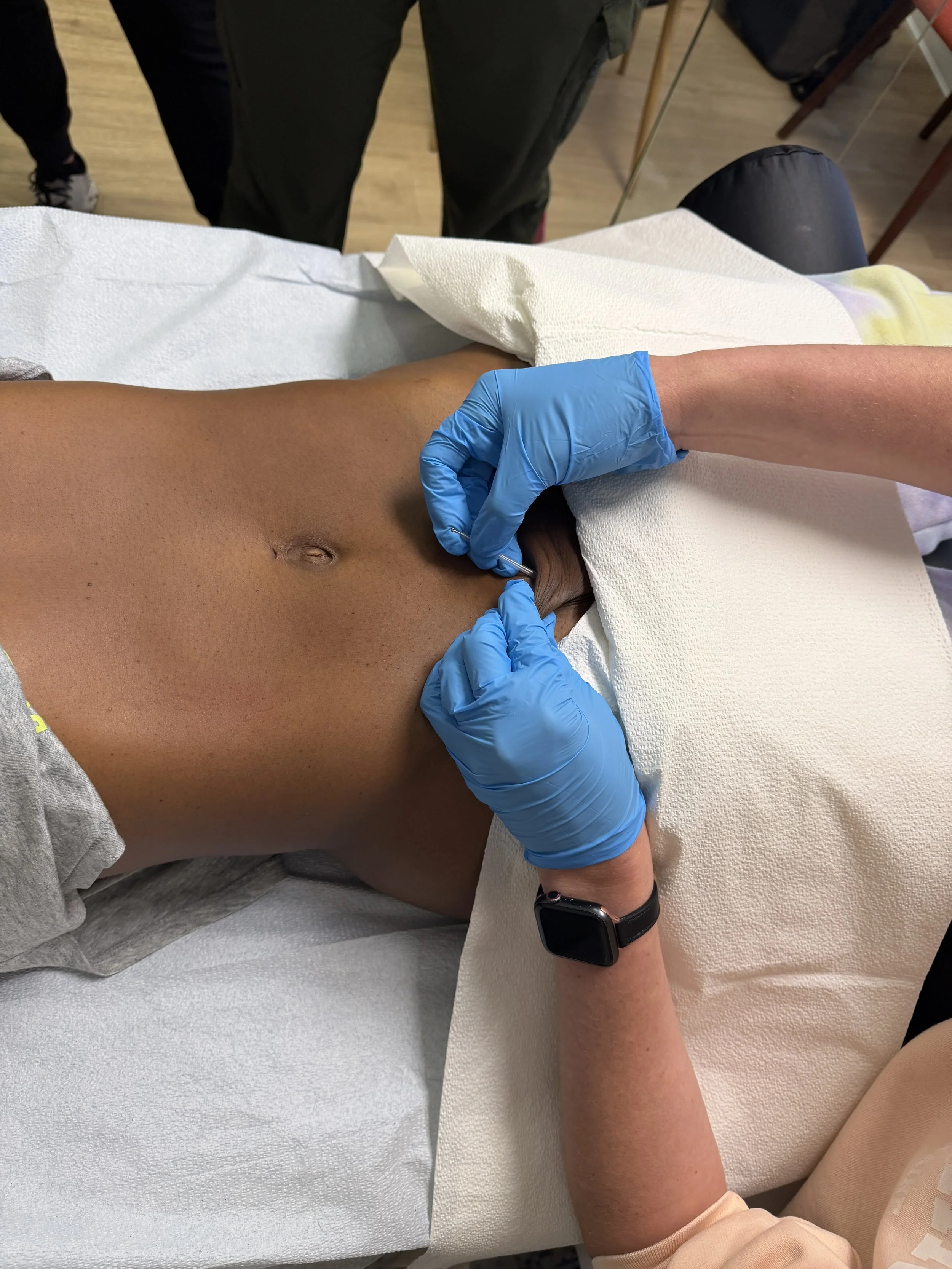
Dry needling can effectively work on those deeper layers via the thin needle inserted into the scar. This insertion creates a micro injury, triggering your body’s natural healing process and bringing fresh blood flow to tissue that has limited vascularization. Additionally, dry needling reduces tension to surrounding muscles, all helping to reduce pain while helping the scar reform and heal.
The result is scar tissue that is more pliable and mobile, nerves that are less irritated and soft tissue that relaxes more easily, all leading a reduction in symptoms. Many people notice not just reduced tightness at the scar itself, but improvements in things like lower abdominal tension, hip mobility, and even bladder or core function because all of those structures live in the same neighborhood.
When is it appropriate to begin dry needling?
12 weeks postpartum is generally the earliest you can begin dry needling a c-section scar. But in order to safely and effectively dry needling a scar, a few more things need to be true:
The scar has to be fully healed with no signs of infection.
We need to be able to lift up the scar away from your body in order to safely insert the needle.
You need to be comfortable with the treatment technique.
Your PT will assess to ensure you’re an appropriate candidate for dry needling and that you don’t have any contraindications prior to initiating this treatment. Contraindications can include being on a blood thinner, having a needle phobia, or pregnancy.
This sounds scary… how do people typically tolerate it and what can I expect during treatment?
We hear this one a lot, and it's completely understandable. When most people think of needles, they think of blood draws or shots, but dry needling is a different experience entirely. And despite these being acupuncture needles, it also doesn’t feel like that.
When we dry needle muscle tissue, it can produce what's called a twitch response which is a brief, involuntary muscle contraction that can feel achey or crampy. But c-section scar tissue behaves differently. Scar tissue tends to have reduced nerve density and blood supply compared to normal tissue, which means it often feels more numb than sensitive. Most people describe the sensation as pokey or sharp rather than painful.
During your session, your PT will assess the scar and surrounding tissue before beginning. The needles used are extremely thin and are inserted at various points along and around the scar. Your PT will be doing more than just dry needling in your session, but the dry needling portion will typically last anywhere from 5 to 15 minutes depending on what's being treated. You may feel some mild soreness in the area for 24 to 48 hours afterward, similar to the feeling after a deep tissue massage, and it's common to notice some redness or irritation round the treatment site.
What are other, more mild, interventions for cesarean scars?
If you feel like your scar needs some support but dry needling sounds too intense or intimidating, or if you’re earlier than 12 weeks postpartum but eager to get started, there are other ways to work on your scar! You may be a better candidate for:
Gentle stretching: Stretching the muscles, skin and fascia around your scar site can be a gentle and effective way to reduce pain around a c-section scar. Anything that gentle stretches your hip flexors and abdominal wall can be beneficial. We generally recommend holding a position for 45-60 seconds, keeping the intensity tolerable throughout. Appropriate stretches depending on where you are in your healing and the specific around your case, but around 6 weeks postpartum these options are appropriate for most people assuming a scar that’s healing well: quadriceps stretch, hip flexor stretch, add in an overhead reach or maybe even a baby cobra.
Scar desensitization: If your scar is extra sensitive or the idea of touching it is making your skin crawl, scar desensitization is an excellent place to start. Reach this blog post to learn how to begin and progress.
Scar massage: If you’re around 6 weeks postpartum have been seen by your OB and your scar is healing well, scar massage may be a better place to begin. Scar massage helps improve scar tissue mobility, promote blood flow and relax surrounding soft tissue.
Cupping: If you’re familiar with cupping, your scar is fully healed, and you’ve already been participating in scar massage, this may be an appropriate place to go next. We’d only recommend cupping your scar if you’re already familiar with cupping techniques. If not, this is something your PT can teach you to do in a session.
Dry needling isn't for everyone, and it's not where we start. But for the right person, at the right time, it can be the thing that gets you that last bit of improvement you’ve been looking for.
If you're unsure whether dry needling is appropriate for your scar, the best place to start is with a pelvic floor PT who can assess your tissue and help you build a plan that makes sense for where you are right now. Whether that's gentle stretching at six weeks or dry needling at six months, there's almost always something we can do to support your healing.
Ready to get started? Schedule a free 15 minute phone consultation or send us a message here.
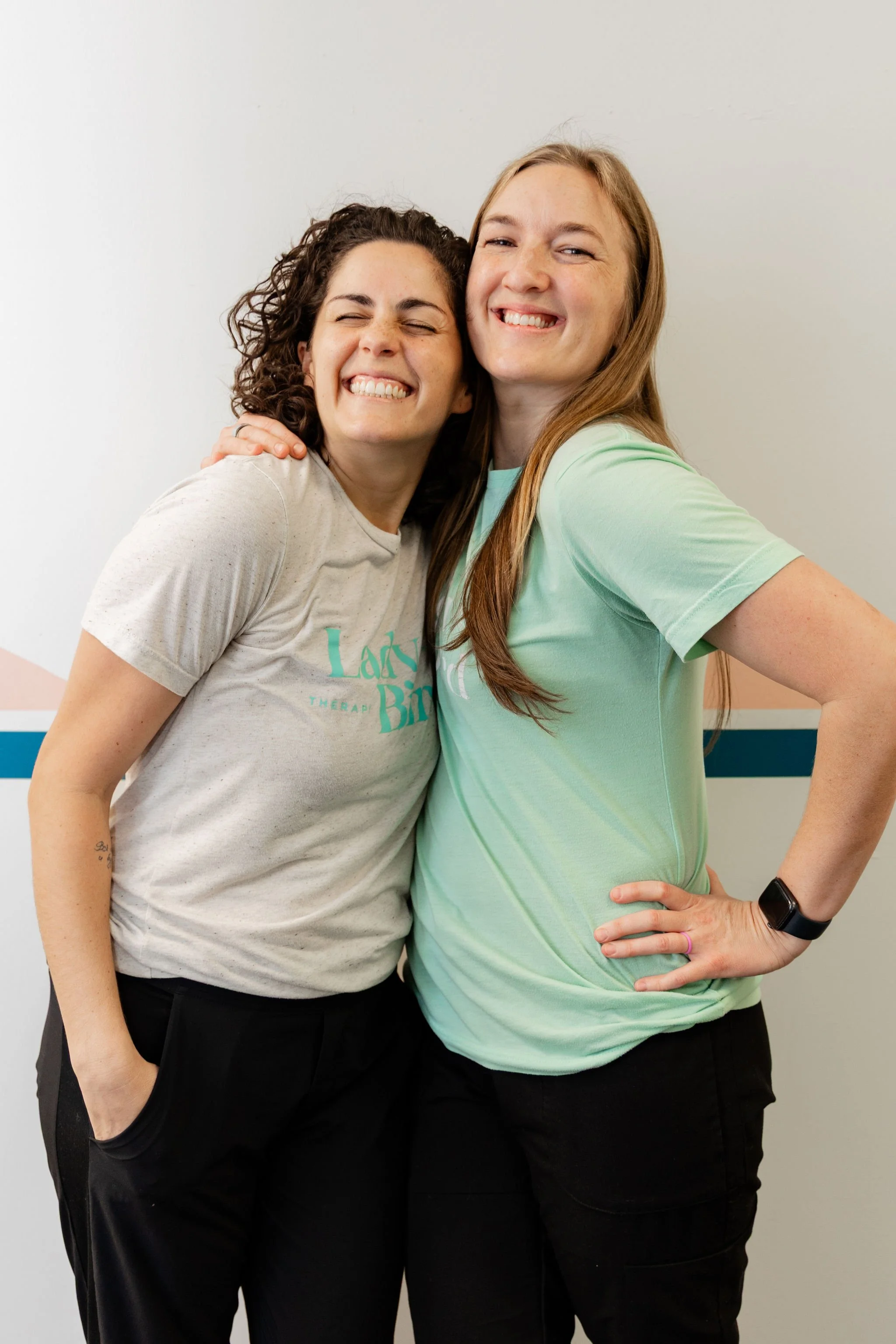
Dr. Jessica Chastka, PT, DPT, WCS and Dr. Rebecca Maidansky, PT, DPT co-wrote this blog post!
Jessica is the clinic director of Lady Bird PT and has been a practicing pelvic floor physical therapist for over a decade. Rebecca is the owner of Lady Bird PT and met Jessica at her first pelvic floor PT job here in Austin, TX!
They’re also co-hosts of The Lady Birds, a pelvic health podcast that alternates between sharing clinical pelvic health expertise, parenting wins and losses and featuring insights from leading women’s health professionals across related fields.
Their joint mission is to provide evidence-based, practical information to help you navigate pregnancy, recovery, and reproductive health with clarity and confidence.