
Why Standing Pelvic Exams Are So Important
A Pelvic Floor Physical Therapist in Austin Explains
Most pelvic exams happen lying down. But you don’t live your life on your back.
You live your life standing, walking, lifting, running, carrying kids, unloading groceries, getting in and out of the car, and move around. And for many people, pelvic floor symptoms show up most clearly during those upright activities that are part of your daily living, not when they’re lying comfortably in bed.
That’s why standing pelvic exams are such a critical (and often missing) part of truly comprehensive pelvic floor physical therapy. If you’ve tried pelvic floor PT in the past but still feel stuck with symptoms like leaking, heaviness, or pelvic pain but you haven’t had a standing pelvic exam, there’s a good chance your pelvic floor wasn’t fully assessed in the positions that matter most.
Let’s talk about why standing exams are so important, what they tell us, and how they shape better treatment for better results.
What Is a Standing Pelvic Exam in Pelvic Floor Physical Therapy?
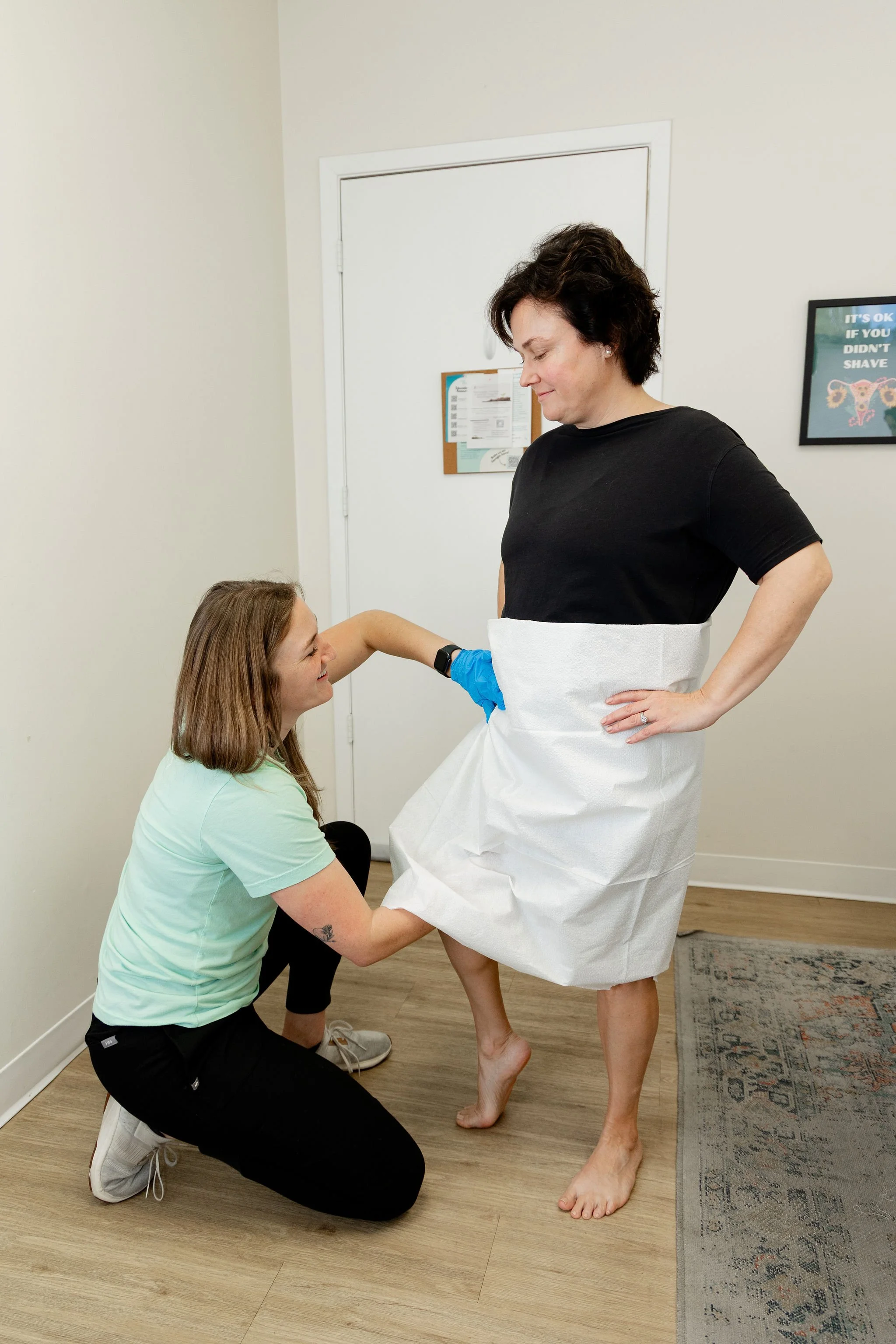
A standing pelvic exam is exactly what it sounds like: an assessment of your pelvic floor muscles while you’re upright and weightbearing, rather than lying down. If you’re worried about the mechanics of a standing exam like many of our patients are - let me describe how they work. We typically start with our patients lying down on their backs with legs butterflied. We start our pelvic exam in that position for comfort and ease. Once we have a gloved finger inserted, we have our patients scoot to the side of the table, sit up on the edge and then stand.
While this extra step is a little clunky, we get SO much great information.
What We Can Assess During a Standing Pelvic Floor Exam
During a standing exam, your physical therapist can assess how your pelvic floor actually functions in the real world:
Against gravity. This is how you spend most of your day, so it only makes sense to assess your strength and endurance in these positions. If you're experiencing prolapse symptoms, standing also allows us to see how gravity directly affects your tissue.
Under load. When symptoms only show up while your pelvic floor is actively supporting the weight of your body, we need to assess it under that exact load. Being upright changes how your pelvic floor coordinates with your breath and core in ways that lying down simply can't replicate.
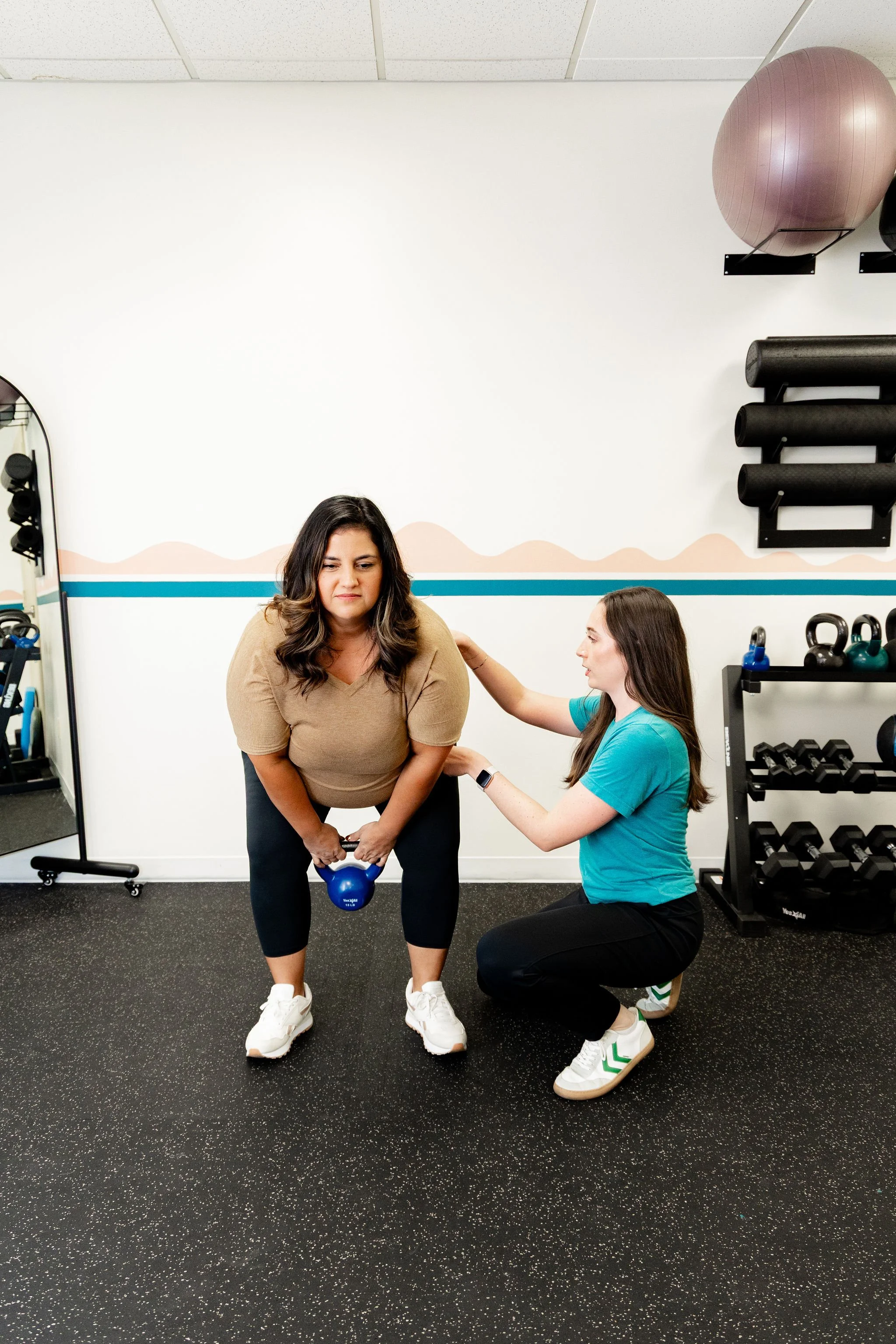
During everyday tasks and movement. The activities that trigger symptoms are almost always things you do on your feet — so that's where we need to watch them happen. Whether it's walking, squatting, lifting, carrying, or jumping, we can assess the specific movements that cause trouble for you in the moment they actually occur.
This gives us critical information that lying-down assessments just can't capture. Some people demonstrate excellent strength on their back but lose that contraction entirely once upright. Others can engage their pelvic floor but struggle to maintain it through movement. These distinctions are what shape an effective, individualized treatment plan.
Why Most Pelvic Exams Miss What Matters Most
Traditional pelvic exams, whether done by your medical provider or physical therapist, typically happen lying down. This position is a useful place to start, particularly with folks early on in their pelvic floor rehab, who are experiencing severe symptoms or who have significant weakness. But for those further along in their treatment or with good baseline pelvic floor strength and coordination, we’re leaving a lot of information (literally) on the table.
When you’re lying down:
Gravity is removed
Pressure on your pelvic organs is reduced
The demands on your pelvic floor are minimal
In that position, many people can generate excellent pelvic floor contractions and appear quite strong, but that doesn’t always translate into functional strength once you stand up. For many, this functional strength is the kind you need to stay dry, pain-free, and confident during daily life and activities.
In other words, your pelvic floor may perform well lying down but struggle once you’re upright. Pelvic floor muscle strength is graded on a 0-5 scale. In my practice, it’s so common to see someone with 4/5 pelvic floor strength while lying down and then see that strength drop to a 1/5 as soon as they stand up.
If we never test for this, we miss the full picture and lose the opportunity to tailor our treatment to your needs. This matters because rehab should match real life. If your symptoms happen while standing, walking, lifting, running, or caring for your kids, then your evaluation and your exercises should reflect those demands. If you’ve been wondering why doing kegels on your back isn’t treating your leakage while running, it’s because your rehab isn’t keeping up with the demands of your day.
How Standing Exams Help Identify the Real Cause of Leaking, Heaviness, and Pelvic Pain
If your leakage, heaviness or pelvic pain show up when you run, jump, lift, or chase your kids but your pelvic floor exam only happened lying down, there’s a major piece missing.
Standing exams allow us to identify:
Weakness that only shows up under gravity: Like previously mentioned, folks can have excellent strength while laying down only to have significant weakness appear in standing. Kegels on your back will not improve your standing strength. Exercise has to be appropriately progressed to meet your needs!
Coordination issues during breathing and movement: Once you stand up, your pelvic floor has to lift the load of your internal organs. It’s like the difference between bicep curling the weight of your hand versus adding a dumbbell. Coordination deficits that weren’t identifiable may show up once that load is added.
Poor pressure management: Pelvic floor symptoms aren’t always about strength deficits - so often pressure management is the culprit. Standing exams allow us to assess how you manage your pressure in standing as you breathe, engage your core and move throughout the day.
Without assessing these, treatment often becomes generic and incomplete, leading to frustration, plateaus, and lingering symptoms.
Who Benefits Most From a Standing Pelvic Floor Exam?
Almost everyone, but especially:
Postpartum parents
Pregnant patients
Runners and athletes
Weight lifters
People with prolapse symptoms
Anyone with persistent leaking or pelvic heaviness
Active folks juggling work, workouts, and/or caregiving
If your symptoms show up when you’re upright, a standing pelvic exam is essential.
Looking for Pelvic Floor Physical Therapy in Austin, TX?
At Lady Bird PT, we believe pelvic floor rehab should reflect real life.
That means your evaluation and your treatment shouldn’t stop at a table. We assess pelvic floor function in multiple positions, including standing and movement, so we can identify the real drivers of your symptoms and build a treatment plan that actually works in daily life.
Our approach is comprehensive, evidence-based, and tailored specifically to your goals, whether that’s returning to running, lifting confidently, eliminating leaks, reducing pain, or simply feeling strong and comfortable in your body again.
If you’ve tried pelvic floor PT before and didn’t get the results you were hoping for, a more functional, whole-body approach may be exactly what you need.
Contact us and experience what comprehensive pelvic floor care should feel like.
Frequently Asked Questions About Standing Pelvic Exams & Pelvic Floor Physical Therapy
Do all pelvic floor physical therapists perform standing pelvic exams?
No, and this is a big gap! Many pelvic floor evaluations only assess muscles while lying down. While this provides useful information, it does not fully capture how the pelvic floor functions during real-life activities like standing, walking, lifting, and exercising.
A comprehensive pelvic floor physical therapy evaluation should include assessment in multiple positions, including standing and movement, especially if symptoms occur during upright activity.
Is a standing pelvic exam uncomfortable?
A standing pelvic exam should not be painful. Your physical therapist will guide you through the process in a way that feels supportive and comfortable. At Lady Bird PT, we move at your pace, explain everything beforehand, and always prioritize consent, comfort, and clear communication.
Is an internal pelvic exam always required in pelvic floor physical therapy?
No. Internal exams are often helpful, but they are never mandatory. There is a lot your physical therapist can learn from posture, breathing patterns, movement assessment, and external evaluation. Internal exams are only performed when clinically appropriate and with your full consent.
Your care should always be collaborative, personalized, and respectful of your comfort level.
Why am I still leaking or having symptoms even after pelvic floor physical therapy?
There are several reasons symptoms may persist, but one common factor is incomplete assessment and training in functional positions. If your symptoms happen while standing, walking, running, lifting, or caring for your kids — but your evaluation and exercises only happened lying down, your pelvic floor may not be getting the specific training it needs.
Assessing and strengthening the pelvic floor in upright, weight-bearing positions often makes a significant difference.
Can standing pelvic exams help with pelvic organ prolapse?
Yes. Many prolapse symptoms only appear or become more noticeable when standing or moving.
A standing pelvic exam allows your therapist to better evaluate:
How gravity affects your pelvic organs
How well your pelvic floor supports your organs
What strategies may reduce symptoms
This leads to more targeted treatment and better symptom management.
What positions should pelvic floor exercises be performed in?
Exercises should be performed in the same positions where symptoms occur.
If symptoms happen:
While standing → exercises should include standing
During walking or running → dynamic and single-leg training is important
During lifting or carrying → functional strengthening is key
This ensures that pelvic floor improvements actually translate into daily life.
How long does a comprehensive pelvic floor evaluation take?
A full pelvic floor physical therapy evaluation typically lasts about an hour. This allows time to assess posture, breathing, movement patterns, strength, coordination, and pelvic floor function across multiple positions. This thorough approach leads to more accurate diagnosis and more effective treatment planning.
Ready to get started? Contact us today.

This post was written by Dr. Rebecca Maidansky, PT, DPT, owner and founder of Lady Bird Physical Therapy. Rebecca is a pelvic floor physical therapist in Austin, TX and founded Lady Bird Physical Therapy in 2019. She is the creator of Birth Preparation and Postpartum Planning, Baby Steps Fitness and the head writer and editor of The Pelvic Press.
Rebecca is a passionate writer and vocal advocate for pelvic health and the importance of improving access to perinatal care. She believes strongly that many common pregnancy pains and postpartum symptoms can be eased or even prevented with basic education and care.