
C-Section Recovery: A Week-by-Week Guide from a Pelvic Floor Physical Therapist
Approximately 30% of people giving birth in the United States will deliver via cesarean section—that’s nearly 1 in 3 births. While cesarean births are common, most are unplanned, leaving many new parents feeling unprepared for the physical and emotional recovery that follows.
An unexpected c-section can feel overwhelming. Many people leave the hospital unsure how to safely move, exercise, care for their scar, or rebuild strength. The good news? There is so much you can do to support your recovery.
In this guide, we’ll walk through evidence-based strategies and gentle exercises you can use during the first 12 weeks after a c-section to promote healing, rebuild strength, and reduce pain. We’ll break things down week by week so you can meet your body exactly where it is.
And if you’re beyond 12 weeks postpartum, this information is still relevant. Healing continues well beyond the 6-week OB visit, so you can jump in wherever feels appropriate for your stage of recovery.
Important Safety Notes Before You Begin
This blog is educational and not a substitute for medical care. Please contact your OB-GYN, midwife, or medical provider immediately if you experience:
Increasing pain
Redness, warmth, or swelling at the incision
Fever or discharge from the wound
These may be signs of infection and require prompt medical attention.
It’s also important to acknowledge that recovering from an unexpected c-section can be emotionally challenging. If you’re struggling, you’re not alone. Postpartum anxiety and depression are common, especially when birth doesn’t go as planned. If you’re in Central Texas, we recommend Reproductive Psychiatry Clinic of Austin and Postpartum Health Alliance of Texas for specialized support.
Everyone heals at a different pace. The timelines below assume an uncomplicated recovery. If you experience:
Pelvic heaviness or pressure
Urinary leakage
Delayed wound healing
Ongoing pelvic, abdominal, or scar pain
…reach out to your medical provider or a pelvic floor physical therapist for individualized care.
A Realistic Timeline for Postpartum Recovery
Despite what society tells us, postpartum recovery is not a 6-week process. True healing often takes 6–18 months. This doesn’t mean you’ll feel be in pain or experience severe symptoms for that long. It simply means recovery is layered, gradual, and deeply individual.
Pelvic floor physical therapy can support your healing at any stage of postpartum recovery.
Your Week-by-Week C-Section Recovery Guide
Weeks 1–3 After C-Section: Rest, Breathing & Gentle Mobility
These early weeks are about healing, rest, and nervous system regulation. Limit activity outside of childcare and essential self-care. If pain increases, scale back. In the meantime, here are some gentle exercises you can focus on to help support recovery in the early weeks.
Practice Deep Diaphragmatic Breathing
Diaphragmatic breathing supports circulation, scar healing, core activation, and pelvic floor recovery. This is a practice that promotes fuller, deeper breaths, abdominal expansion and pelvic floor relaxation. As you inhale, focus on filling and relaxing your belly. If you can feel your pelvic floor gently open and relax at the top of your breath, great! As you exhale, allow your belly to gently drawing inward.
Practice a few minutes of breathing each day in any position, including:
Lying
Sitting
Standing
While feeding your baby
Stand Tall When Upright
It’s natural to hunch forward to protect your incision, but prolonged forward posture can lead to stiffness, back pain, hip flexor tightness and scar restriction. You’ll hopefully be spending the majority of these early weeks resting, but when you are standing, stand tall.
Think: Chest tall, ribs stacked over pelvis, gentle length through the front body.
Reconnect with your core
Gentle abdominal activation exercises are a great place to begin reconnect with your core and regaining core strength postpartum. Here’s a visual aid as well as some verbal cues that can help you reconnect with your abdominals! Spend a few minutes practicing each day and don’t put too much pressure on yourself. It’s amazing how hard just a little work can feel in the early days.
And if you want a little more, here’s a quick guide for reconnecting with your core and pelvic floor postpartum.
Look at Your Scar
While you won’t begin hands-on scar work yet, visually checking your incision helps you monitor your healing, reduce fear or avoidance in the future and improve your body awareness. Some folks find this to be triggering and taxing - remember to be kind and take it slow.
Weeks 4–6 After C-Section: Walking & Scar Desensitization
If your incision is fully closed and healing well, you may begin scar desensitization around weeks 5–6.
You can continue all of the above:
Belly breathing
Upright posture
Reconnecting with your core
Gentle daily movement
But you may also be ready to add in:
Scar desensitization:
It’s too early to begin scar massage, but desensitization is a great way to start working on your mind body connection and reducing any discomfort surrounding your scar. Use soft textures and light touch to reduce sensitivity and promote healthy nerve healing. Read about how to perform scar desensitization in our guide, here.
Walking progression:
Increase walking by ~5 minutes per week, as long as you’re not experiencing:
Pain
Pelvic heaviness
Urinary leakage
Week 1, we generally want to limit time on your feet to about 5 minutes. You can be up multiple times per day, but give yourself a chance to rest inbetween. Week 2 you can typically progress to 10 minute increments, progressing to 15 minutes week 3 and so on.
Weeks 7–9 After C-Section: Scar Massage, Stretching & Core Strength
Once your incision is fully healed, typically around week 6, you may be ready to begin scar massage as well as progress stretching and core strength.
Begin Scar Massage
Scar massage should not be painful, though it may be uncomfortable. It’s normal to have soreness in the hours and day or two following c-section scar massage but if you have any concerns, please contact your provider. Gentle scar massage helps support scar healing by:
Improving tissue mobility
Promoting circulation
Supporting nerve health and recovery
Reducing pain
Learn more about scar massage techniques from our scar massage guide.
Gentle Stretching
Stretching the muscles and connective tissue through the front body can help reduce back pain, scar pain and so much of the discomfort associated with postpartum recovery. Following a cesarean, the key muscles we’re focusing on are:
Hip flexors
Quads
Chest
Abdominal wall
The stretches below are a great place to begin. Hold each stretch 30–45 seconds, repeating 2–3 times. Stretch should feel gentle—not painful.
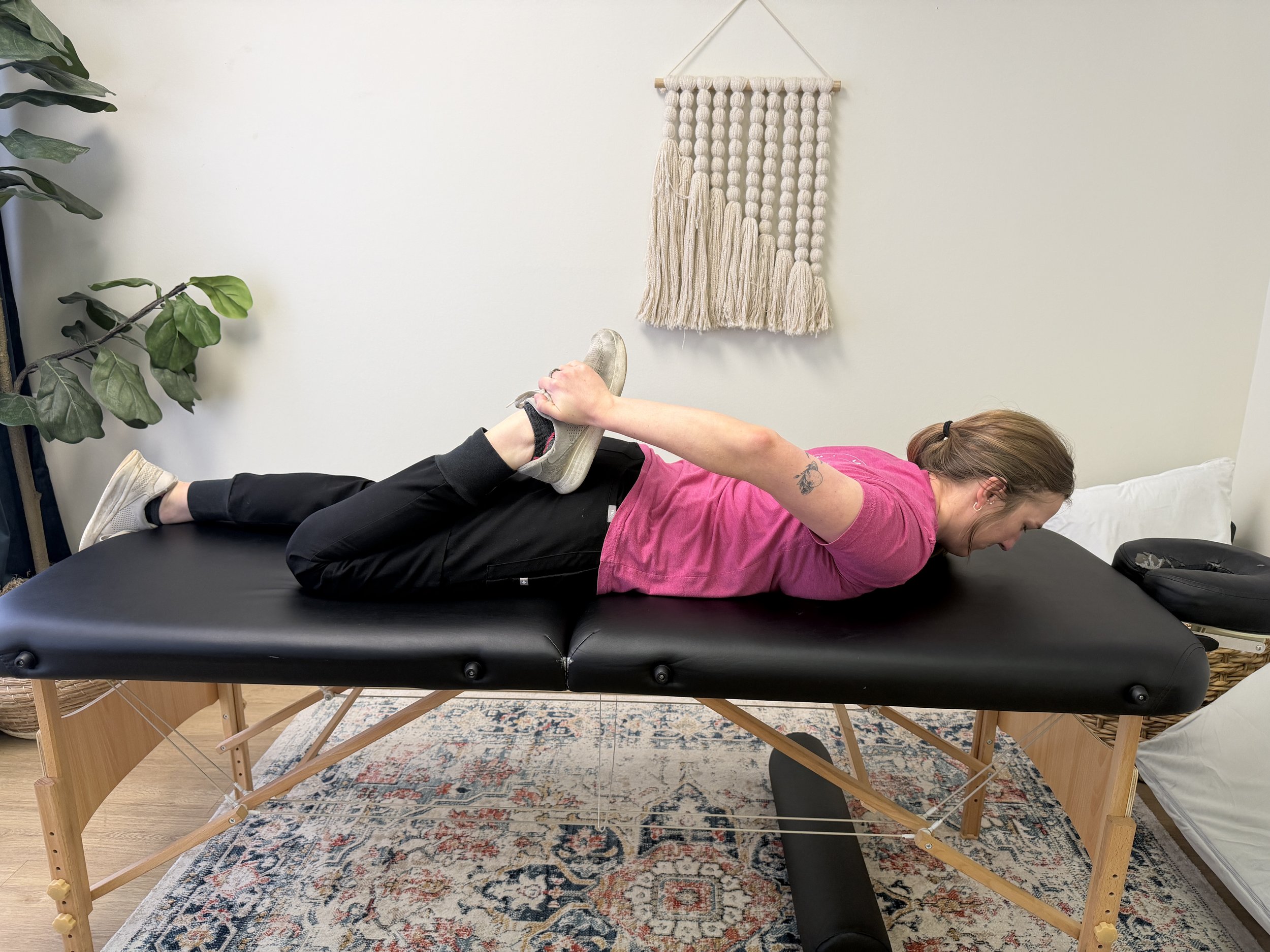
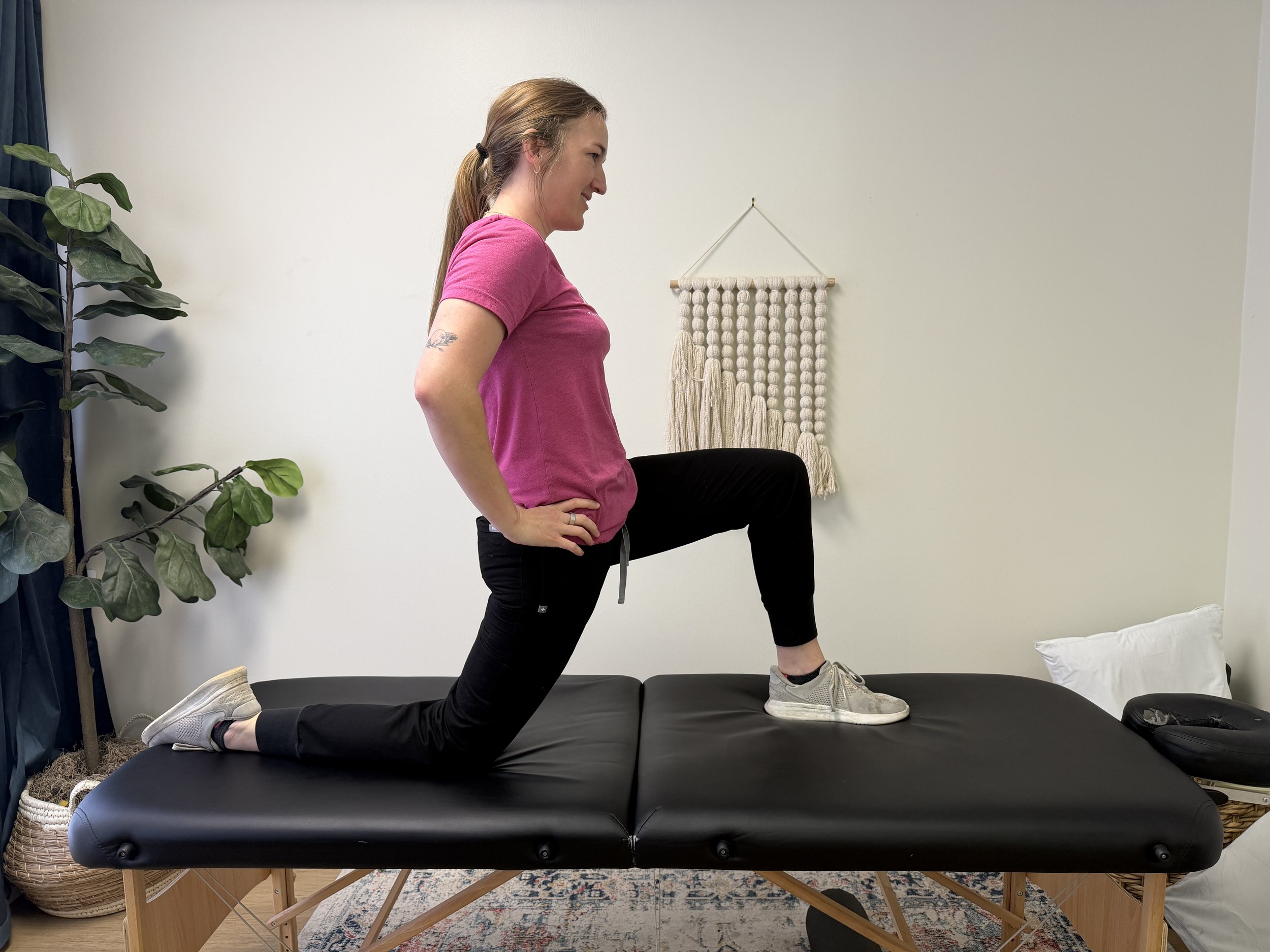
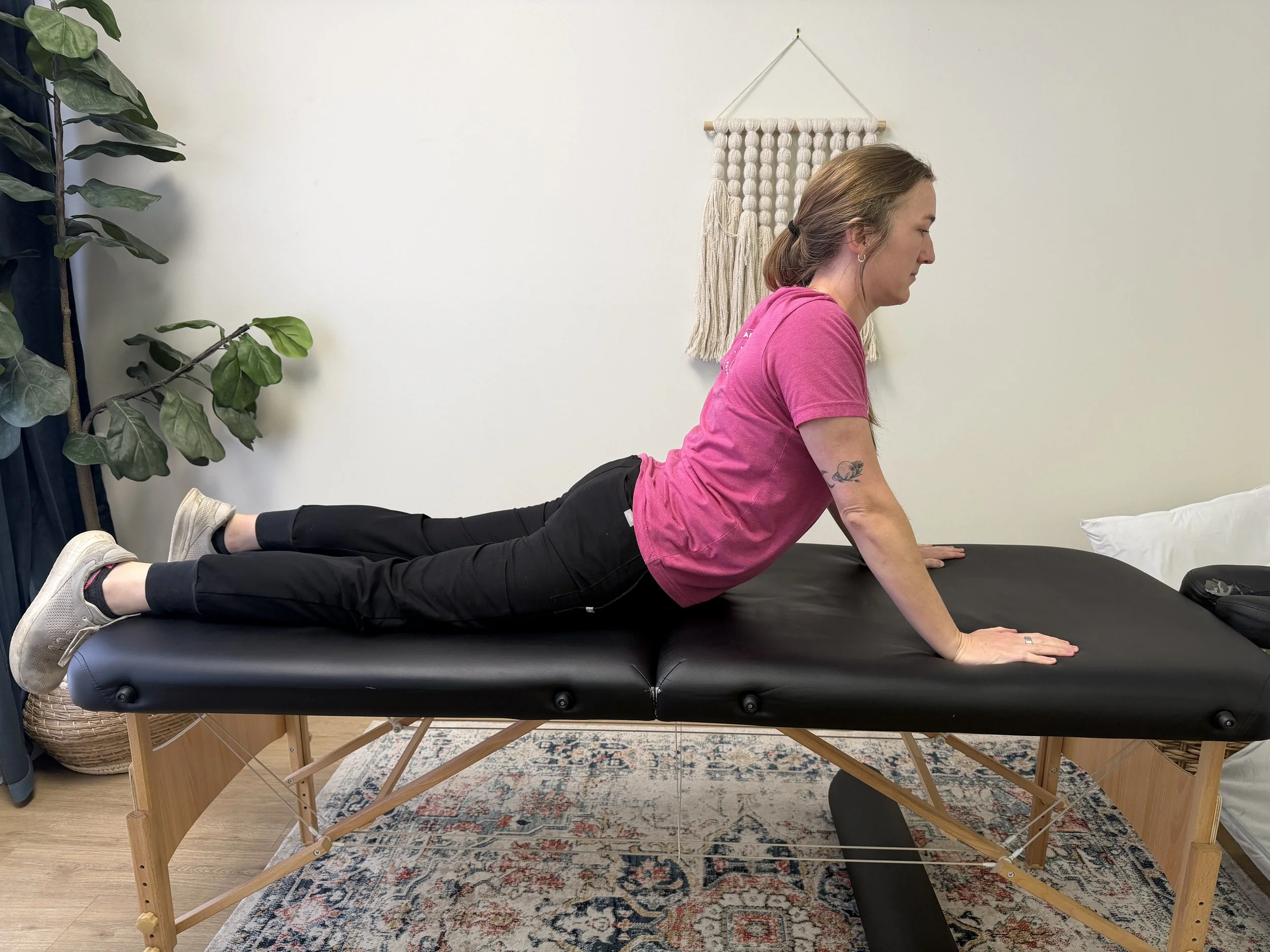
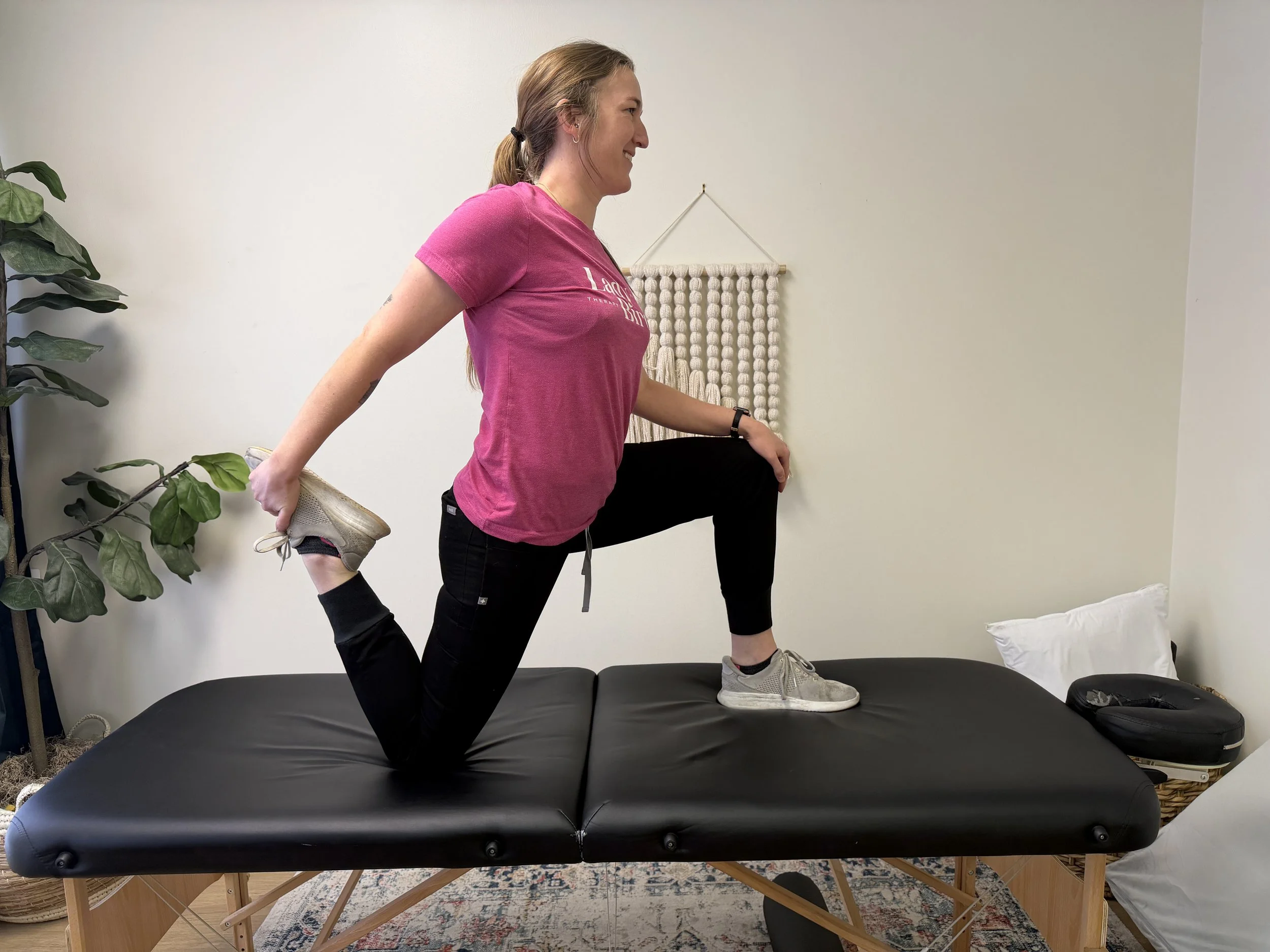
Core Strengthening
A c-section is abdominal surgery, and regaining core function is key for:
Reducing back pain
Supporting pelvic floor recovery
Returning to exercise safely
There are no exercises that are appropriate or inappropriate for all in the postpartum period. If you’re not sure where to begin, check out our postpartum fitness program.
This stage is ideal for pelvic floor physical therapy guidance. A 2020 study found up to 25% of people still experience scar pain at 3 months postpartum. If pain persists, pelvic floor PT can significantly improve comfort and function.
Weeks 10–12 After C-Section: Strength, Mobility & Confidence
Continue:
Scar massage
Stretching
Progressive strengthening
Focus on progressing:
Core stability
Glute strength
Gradual return to exercise
If you’re still experiencing pain, leakage, pressure, or weakness, working one-on-one with a pelvic floor physical therapist can dramatically improve your recovery experience.
When Should You See a Pelvic Floor Physical Therapist?
Pelvic floor PT can help with:
C-section scar pain
Core weakness
Diastasis recti
Pelvic pain
Pain with sex
Urinary leakage
Return-to-exercise guidance
If you're in Austin, TX, our pelvic floor physical therapists specialize in pregnancy and postpartum recovery, both in-clinic and virtually.
👉 Contact us here to get started.
Final Thoughts: Recovery Is Not a Race
Healing after a cesarean birth takes time. Your body is not behind. Wherever you are in your recovery, support is available.
Recovery doesn’t need to be a guessing game. We’re here to help.
Want to learn more about c-section scar pain and recovery?
Click here to learn about our self-paced, c-section recovery program to help you reduce pain and sensitivity around your scar while regaining strength and confidence after your cesarean. It’s never too late or too early to start supporting your body through your recovery.

This post was written by Dr. Rebecca Maidansky, PT, DPT, owner and founder of Lady Bird Physical Therapy. Rebecca is a pelvic floor physical therapist in Austin, TX and founded Lady Bird Physical Therapy in 2019. She is the creator of Birth Preparation and Postpartum Planning, Baby Steps Fitness and the head writer and editor of The Pelvic Press.
Rebecca is a passionate writer and vocal advocate for pelvic health and the importance of improving access to perinatal care. She believes strongly that many common pregnancy pains and postpartum symptoms can be eased or even prevented with basic education and care.
She created this blog to help all birthing people manage common pregnancy pains, prepare for birth and recover postpartum.