
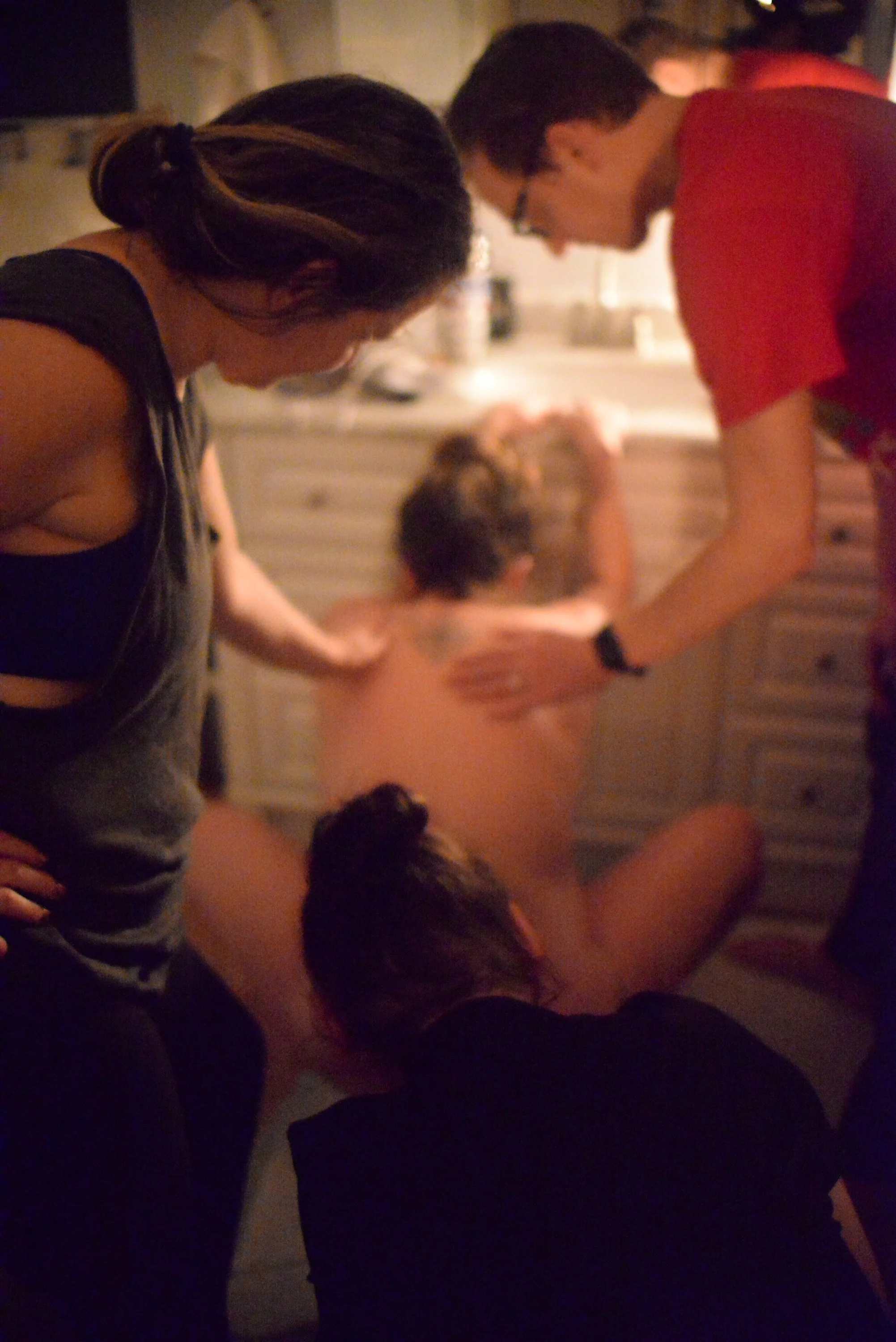
In labor with my son, doing all that I could to stay off my back and give my tailbone space to move freely.
Like most of the patients who come through Lady Bird’s doors, I had no real idea what my pelvic floor muscles were until they became a pain in my ass… literally.
It was January of 2020. I was 3 weeks postpartum from my second vaginal delivery, and I couldn’t sit or lay down from pain. It was not the most ideal condition for a recently postpartum mom with instructions to stay in bed.
During delivery, my son’s head had kicked my tailbone out of place as he exited.
I felt it. My midwife heard it. It was as excruciating as you might expect. Afterward, my body felt great in every other aspect of my recovery but the pain at my tailbone was absolutely debilitating and really ruined the vibes.
I’d been worried about this possibility because the same thing had happened during the delivery of my daughter three years prior, and that injury had taken over a year of healing to be able to sit normally without discomfort. So with my son, I labored in upright positions and had the best laid plans to deliver my son on my hands and knees in order to create more space and flexibility for my tailbone and hopefully avoid the same injury but, because birth is an unpredictable beast, I ended up hating the feeling of being on all fours. The absorbent pads my midwife had placed on my bed kept sliding around. I was already shaky from hormones and my legs could barely hold me up. I felt unmoored. I couldn’t get any purchase or grip or force. And pushing a baby out, even a speedy bullet of a second baby, requires force.
I flipped to my back and tried to lift one side in a vain attempt to still give my tailbone a little extra space. I was exhausted and unable to maintain the position. My son, with his 21” diameter head, came rocketing out in the classic lithotomy – flat on my back with legs up – position. My poor tailbone never stood a chance.
A few weeks later, when I felt like I could leave the house, I visited my chiropractor and told her I thought I’d broken (possibly rebroken? I’d never had it checked out the first time around) my tailbone. She assessed, but told me she didn’t think the bone itself was impacted.
She recommended pelvic floor physical therapy and wrote me a referral to Lady Bird.
I called that same day. Back then in the first weeks of 2020, before the pandemic shut life down, Lady Bird PT was just Becky, our founder, working as a solo practitioner. She answered the phone herself and put me on her schedule for the next day.
It was at that evaluation that I learned my first of many lessons over my years at Lady Bird: pain is your body’s way of communicating.
After assessing what she politely referred to as severe tension (read: I’m a literal tightass), Becky explained my pain in a way that my analogy-loving brain understood immediately: when my tailbone shifted to accommodate my babies’ heads during delivery, the muscles surrounding it went into overdrive in an effort to avoid further injury. They spasmed around the bone to provide support and stability, to guard it from further shifting. That’s their job. My muscles were trying to help, but they took it a little too far. She equated this, essentially, to whiplash of the asshole.
I had no idea that this could happen. It made perfect sense once it was spelled out to me, but why hadn’t it ever occurred to me that my pain might be a muscular thing? I had assumed that because I’d felt my tailbone shift during delivery and then subsequently had pain in my tailbone, that my injury was… just a tailbone thing, which is why I’d run to my chiropractor.
But what supports your bones? Hint: muscles do!
When we experience pain, it’s not something that we should just write off as normal or try to get through it with time. It’s our body telling us something is going on, even if the source isn’t what we think it is. Pain is information, not an inconvenience to ignore.
Lesson number two: Sometimes the key to fixing a system is as simple as unlearning poor habits.
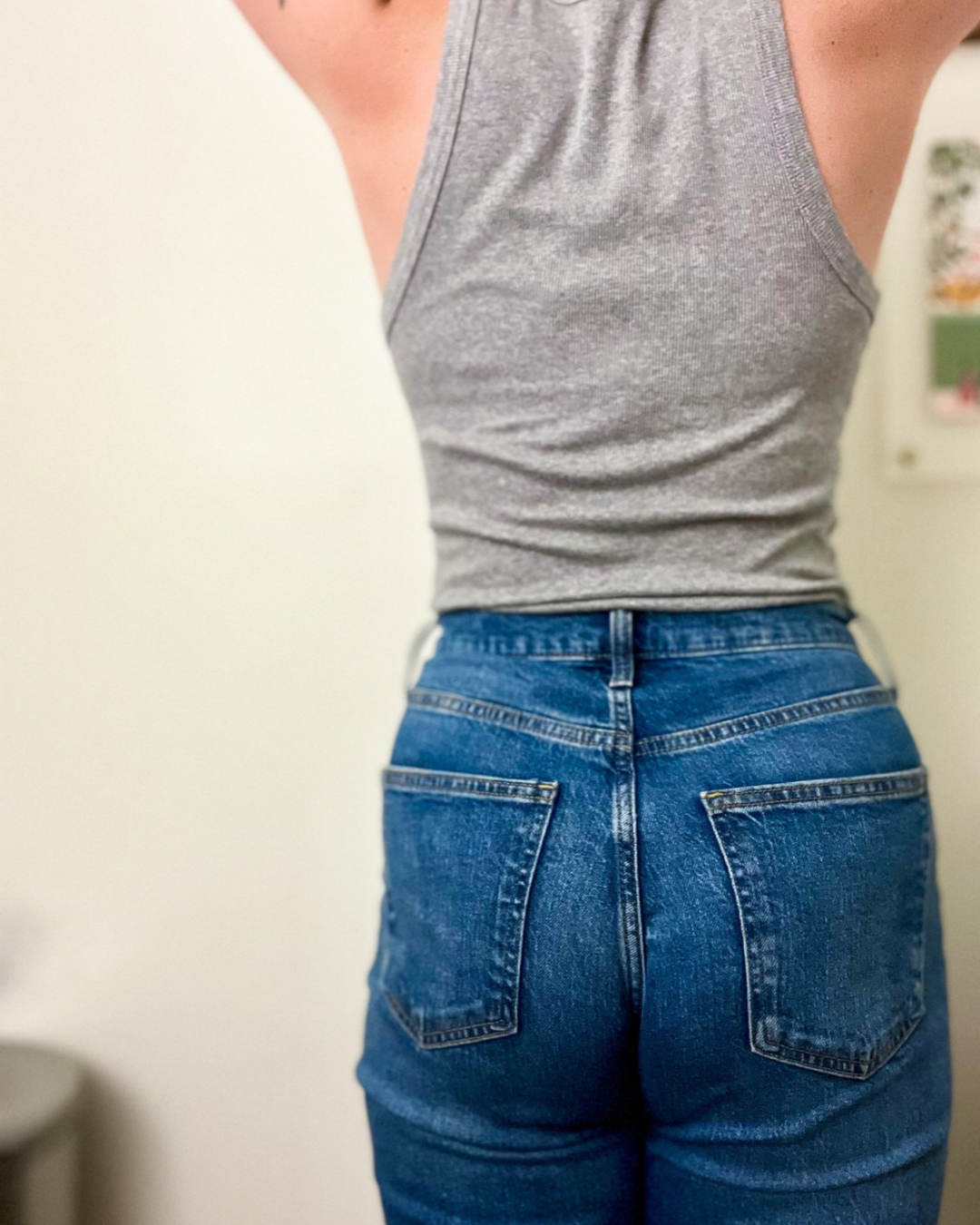
If you chronically clench your booty, you might have pelvic floor tension.
At a different point in Becky’s assessment, she asked me if I ever clench my butt.
“Do I ever!” I responded. For as long as I can remember, I’ve gripped my buttcheeks. I had been clenching so aggressively for so many years that my best friends have affectionately nicknamed my booty “Melba butt” after my sweet, late grandma who used to putter around with her robe hanging open and her own little clenched buttcheeks peeking out.
A lifetime of clenching had created chronic tension in my pelvic floor muscles. Becky coached me on how to consciously relax my pelvic floor with a deep diaphragmatic breath and the relief was instant. I almost couldn’t believe it. Over the next few days the only thing she had me work on at home was unclenching, and my pain eased significantly.
It’s 2026 now and I still have to remind myself upwards of what feels like 50 times a day to loosen up my butt, but the more consistent I am with consciously unclenching, the better my entire body feels.
And I’m not the only one! Every day, our patients benefit greatly from such simple tweaks as changing the position they sit in at their desk or how they carry their baby, breathing into their belly instead of their chest, using a footstool during bathroom breaks, or just paying attention to which muscles are doing what, and when.
Lesson number three: Nothing works in isolation.
I say it to every potential new patient I speak with on the phone: something that sets Lady Bird apart from other pelvic floor PT practices is that our clinicians assess not only your pelvic floor but the surrounding muscles from your ribs down to your knees, because nothing in the body works in isolation. Everything is connected, and full functionality depends on the whole system working in coordination and each muscle doing the job it’s supposed to do.
Now, remember that I had gone to see Becky that first time for tailbone pain. When she’d asked on our phone consultation if I had any other symptoms of pelvic floor dysfunction, I’d said no. In the course of my evaluation though, Becky proceeded to connect dots for me that I’d had no idea were signs of pelvic floor dysfunction, were even related, or might be treatable with physical therapy.
Symptom: For most of my adult life, I would feel tiny dribbles of urine after I thought I’d finished peeing.
Root cause: Chronic tension in my pelvic floor from clenching my booty led to a decreased ability to fully relax my pelvic floor muscles. That relaxation is necessary for full bladder emptying. Picture squeezing the bottom opening of a big bag of water. Some will get out, but it can’t empty fully until you release your hand.
Fix: Pelvic floor relaxation exercises, manual therapy, and deep belly breathing.
Symptom: Low back pain when standing, walking, or carrying a kiddo for longer than 30 minutes.
Root cause: Poor intra-abdominal pressure management and improper coordination. Picture a balloon. Squeeze the top of the balloon and what happens? The bottom bulges out because there is nowhere else for it to go. I’d rocked a pretty tight two-pack on my upper abs since college and always assumed the less defined, bulgier lower portion of my abs were just a few crunches away but suddenly, the enduring shape of my core – my own personal balloon, being squeezed at the top and therefore bulging at the bottom – made sense. I had no idea that my upper abs and my clenched booty were taking the reins to support me while I stood, when the support should have come from across my full core, hips, glutes and thighs. This lack of coordination and proper sharing of the load led to my pain.
Fix: Unlearning my ab and booty clenching habit, engaging my deep transverse abdominal muscles, strengthening my glutes and legs.
Symptom: I had no issues with orgasm when I was lying down, but struggled to achieve one in a standing position.
Root cause: A female orgasm is created by the rhythmic contraction and relaxation of the pelvic floor muscles. My chronically clenched butt had not only impeded the ability of my pelvic floor muscles to achieve that relaxation in standing necessary for orgasm, but the muscles lacked full strength because it’s impossible to properly strengthen a tense muscle.
Fix: Pelvic floor relaxation, manual therapy, pelvic floor strengthening exercises in standing.
I left that appointment with my mind a little bit blown. I learned more about my body and years of symptoms in a single session than I had ever learned in 15+ years of annual gynecological visits, chiropractic care, college anatomy courses, and sporadic yoga and pilates classes combined.
When I started working here a year later, I began to see the same patterns emerge from each of our patients: seemingly unconnected symptoms, years of writing certain things off as “just the way things are,” that slightly stunned blink when they come out of the treatment room having just learned that their nightly jaw clenching has contributed to their pain with sex or that their persistent knee tweak feels better after internal vaginal manual therapy.
Lesson number four: The right pelvic health care is truly priceless.
It’s hard not to feel cynical that our current healthcare system is set up to fail patients. It’s no secret that favoring a “fix the problem” approach instead of prevention is one that does not see great outcomes. We pay hundreds or thousands each month in premiums, only to have surprise bills show up later or have care denied. We fork over a huge chunk of our paychecks for insurance, only to be rushed through appointments. Our system also historically underserves women’s health and shrugs its proverbial shoulders at common issues (looking at you, endometriosis, PCOS, painful intercourse, fertility, postpartum rehab, urinary leakage, etc…), and an entire segment of the population is left feeling dismissed and hopeless.
When Becky started Lady Bird, she made the intentional choice to leave insurance out of the picture. Having treated patients for years in an insurance-based setting, she kept running into the same roadblocks to offering truly exceptional care: appointments were too short and caseloads were too large, her treatment plans were dictated by diagnosis codes and allowed amounts instead of clinical judgement, and patient education was not part of the process.
It is completely understandable to be less than thrilled about paying out of pocket for pelvic floor PT when you already pay for insurance. It’s a real financial barrier for many, and it makes sense when someone’s knee-jerk reaction is to seek care at an in-network clinic first. Insurance-based PT can absolutely help people. But until the system changes, the care that gives you the best chance at lasting results – individualized, education-focused, holistic care that helps you understand your body and work toward lasting change – may not always be the care your insurance covers.
I wish that weren't true. But I also wish we'd stop treating relief from pain, better sexual health, and the ability to move through daily life comfortably as optional extras. It’s become normalized to spend hundreds of dollars several times a year on expensive skincare in order to look a certain way, and yet spending that same amount on care that could relieve chronic pain or change how we experience our bodies is too often seen as indulgent or unjustifiable.
Maybe that's because we can see the results of one in the mirror, while the value of the other is harder to quantify. (The angry voice inside me rage-whispers that maybe it’s because we’ve all been spoonfed the insidious message from day one that a woman’s comfort is not a priority, but a woman’s appearance is her currency.) Whatever the reason, I think it's worth questioning why we've learned to treat feeling better about how we look as an investment, but feeling better in our bodies as a luxury.
That’s my two cents. I care so deeply about women’s health, and about the work we do at Lady Bird.
If there’s one thing you take away from my story, it’s that I hope you see your pelvic health as worthy of attention. Worthy of your time, worthy of an investment, and worthy of learning more about. It ain’t easy being a woman in today’s backsliding world, and it can almost feel like a tiny act of rebellion to care for ourselves in this way. No, we don’t want to live in pain. No, we don’t want to pee our pants when our kickass girlfriends make us laugh out loud. Yes, we deserve to enjoy sex! There’s still a long way to go in making this kind of care accessible to everyone, but in the meantime, I hope you’ll keep asking questions, advocating for yourself, and believing that feeling good in your body is worth pursuing. You deserve that.

This post was written by Allie Malinovich, Office Manager and Head of Operations at Lady Bird PT. Allie is a passionate advocate for women’s health and has spent the majority of her career in woman-run, woman-owned businesses helping to improve people’s experiences in their own bodies. She is a fervent supporter of the Oxford comma.
